The order has finally arrived. The material to be processed is recovered from the warehouse and loaded onto the machine. The plastic begins to melt in the burning jaws of the machine. The pigments blend with the resin, giving it brilliant shades. The colored spindle is pushed into the mold. The plastic quickly cools and takes the shape of the shape. The piece is released. There we go. Our product is ready, we can proceed with assembly and delivery but… Wait a moment. Why are there cracks in the plastic? And not only on this piece, also another and another! Oh no! Now how to do it? And has such an episode ever happened to you, perhaps while a production of caps, chairs or toothbrushes was in progress? I imagine the hassle! But I’ll tell you a secret: these things happen. Read on, we will explain the causes and how to remedy the formation of cracks in plastic.
Crystalline polymers vs amorphous polymers
To be able to make this journey, we must first understand how plastic is made. As we said in our previous article, plastic polymers are an intricate intertwining of molecules as long as filaments. The more or less orderly conformations that these textures take on give shape to very different plastics. Some molecular segments are able to compact into ordered structures, similar to those of crystals in nature. Therefore, polymers characterized by this type of interlacing are known as crystalline polymers. They have evenly aligned segments and their structure is more compact and dense. On the contrary, there are also amorphous polymers whose composition is made up of molecular filaments that are too bulky to order themselves and therefore cool down in a more chaotic and disorderly way.
Differences in appearance in polymers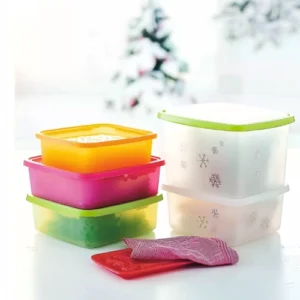
Don’t be fooled by the names: crystalline does not mean that the material is as fragile as crystal. In fact, it is just the opposite: it is the amorphous polymers that are the most rigid and glassy. For example, SAN (polystyrene) is an amorphous plastic with a transparent appearance, while PP (polypropylene) of a semi-crystalline nature can be milky and soft. This is why PP is used in the production of closures for food containers and bottles. Thanks to its neat crystalline structure, which gives it strength, polypropylene offers an effective barrier against external agents to preserve the freshness of food. In addition, its mechanical strength makes it suitable for use in transport and storage conditions.
Cracks in plastic: a question of structure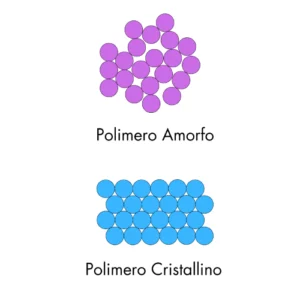
To recap, in a crystalline polymer the molecular chains are arranged in a more orderly way, like soldiers in formation, while in amorphous polymers there is more chaos in the arrangement of the filaments. So here’s where the trick lies: a polymer’s density and strength are affected by its degree of internal order. In fact, the more crystalline a plastic is, the denser it is, because the polymer chains that make it up are grouped together in a more compact way. It’s a bit like they act as tight-knit armor. For this reason, it is mainly amorphous materials that are prone to cracking in plastic: since the polymer is not tough enough and this is due to the lack of cohesion of a solid crystal structure.
Temperature influences the formation of cracks in plastic
It is not only a matter of chemical predisposition, the degree of crystallinity achieved by a polymer also depends on the rate of cooling during solidification. That is, the moment in which the molecules free to move return to group and order themselves, passing from liquid to solid. In simple words, molecular chains compact into an orderly configuration if they have enough time to do so. In fact, the drop in temperature also leads to a loss of volume, which generates tensions on the surface of the material. Of course, this ability to crystallize is strongly influenced by the chemical structure: the process is favored in the case of polymers with chemically simpler structures. So, if the polymer does not have enough time to rearrange itself before cooling, it could create defects on the surface of the product, such as cracks in the plastic and distortions.
The case of bottle caps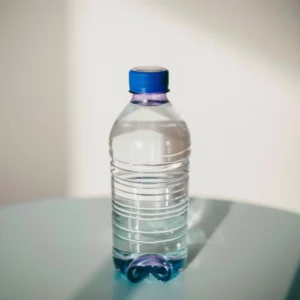
An example of this is the production of caps, such as those for soft drink bottles, which must be made quickly and in large quantities. During the process, molten plastic is injected into hot molds to quickly form parts. Once the mold is filled, the piece is immediately released, to accommodate new molding material, and so on. However, it is precisely the speed and quantity required by production that often compromises quality. In fact, the plugs may not have enough time to solidify properly before being released. In addition, the machine’s cooling system does not always cover all areas of the mould evenly, so we will have parts produced at the same time but with completely different local temperatures. The resulting thermal shock prevents the molecular filaments from crystallizing well inside the caps produced, causing surface tensions and thus cracking in the plastic.
A solution to cracking in plastics
To help mitigate the problem, additives called nucleating agents are used. These are chemical compounds that affect the crystallization of plastics. Essentially, they act as crystallization germs within the material. These nuclei provide anchoring sites for molecules, allowing them to facilitate the formation of a neater and more compact crystal structure. As a result, the plastic becomes less susceptible to deformation and stresses during cooling. Basically, imagine that plastic molecules are like kids at a party: some people make a mess, shout and dance everywhere (these are the molecules of amorphous plastics), while others are a little more composed and dance in groups (of course, crystalline plastics). Nucleating agents help the “unleashed” plastic molecules to organize and dance better, as if they were choreographers, encouraging them to compact. This reduces the formation of cracks in the plastic and improves the structure and strength of the polymer.
Does your plastic deform too often during production?
Discover our Shelligent line, masterbatches for smart closures (and more!) that prevent the formation of cracks in the plastic and warping.