Are you looking for industrial color assistance? Discover the Gaypa mono pigment masterbatches. Revolutionize your production!
Imagine this scene: a plastics converter expert in extrusion, perhaps coming from the compounding sector or sheet production, receives an urgent request (as always!) from an important customer. It must produce a large batch of plastic materials, but the conditions are essential: the color must be uniform and precise from the first to the last piece. And perhaps, we add, the color must also be of a particular, personalized shade. What to do? A race against time begins in search of a solution… But don’t panic! We are here to offer industrial color assistance. The solution we offer? Bespoke! Read on to find out more.
Special monopigment masterbatches
In a previous article we explored what the Monobatch monopigment masterbatch line was, focusing on its
peculiar formulation. In the next few lines, we want to focus on the differences from traditional masterbatches and offer more clarity on their practical uses. Let’s start with a distinction, by definition:
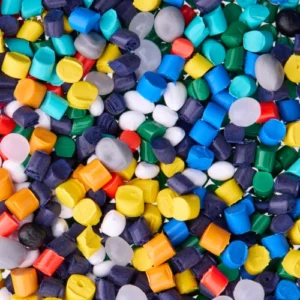
- Masterbatches are concentrated formulations in which coloring pigments are mixed with a polymer resin base and additives. They come in the form of granules and are designed to be added to the plastic during processing, in order to give the desired color.
- Monobatches, on the other hand, represent a more specific solution. It is a product that contains a single pigment dispersed at its maximum yield in a polymer matrix. Thanks to this formulation, the product is ready to use, with a perfectly uniform color that guarantees extremely precise and constant results.
Masterbatch, custom and unique colors
Can I customize the shades of a color? Are there limits? These are just some of the questions that those looking for industrial color assistance often ask. The answer depends on the degree of customization and the type of processing that will be performed. Masterbatches are a “closed formula” solution where each color combination is predefined by a recipe. This means that you can choose a specific color, any one, and the masterbatch maker will make it for you by combining different elements. In fact, although the existing pigments – suitable for the formulation of masterbatches according to regulations – are limited in number, their combinations go beyond imagination. Suffice it to say that within a formula composed of several pigments it is sufficient to vary even just 0.1% the percentage of one of these and a new color will be obtained. They are suitable for any type of processing and quantity and do not require further interventions on the color during processing.
Monobatch: unleashes the strength of pure color
Monobatches are even more unique. This type of special formulation allows to obtain a high chromatic consistency and pigmentations with high coverage. But they are standard, i.e. not customizable. In fact, each Monobatch recipe contains a single pigment and, as already mentioned, those suitable for processing on plastic material are a limited number. However, although this may seem like a limitation on the one hand, in reality this simplicity proves to be very advantageous for polymer converters who can use it! In fact, Monobatches, thanks to their monopigment nature in optimal dispersion, are ideal to be mixed together, to create new home-made shades. The concept behind it is similar to that of a painter who, in order to create a work, obtains only a few primary colors and then, mixing them together on his palette, creates new and original shades.
When does the industrial color service recommend using Monobatches?
Monobatches are ideal for use in the large quantity market. In particular, in those contexts where extreme chromatic precision is required, to solve pollution and dosage issues, typical of the world of color formulation. For example, in compounding, it may be necessary to adjust a shade by introducing a corrective pigment in quantities of less than 1%. However, dosing plants, especially when processing pigment powders, struggle to handle such small quantities precisely. There is a risk of never being able to completely correct the color, giving way to the process of chromatic drift. In addition, in large volumes, a “pinch of dust” may not disperse well, forming clumps and streaks that compromise color uniformity at the end of the process. The Monobatch anticipates this problem. Each pigment is pre-dispersed in a carrier that is easier to handle, such as polymer resin grains that provide greater precision and control.
Industrial color assistance: how to identify a color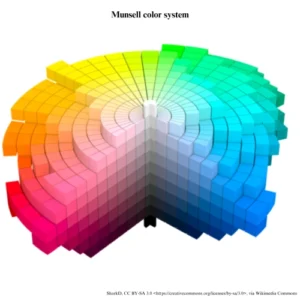
On a chromatic level, Monobatches are dark, dense, saturated, representing colors in their depth. To better understand how they work, let’s try to refer to the Musnell color system (you know?). To explain simply, imagine a sphere: at the ends of the horizontal axes we find the opposing colors such as red-green and blue-yellow. In the vertical axis we find white above and black below. In the center the colors are neutral, on the outside intense and pure. Each point in this space represents a different color, with precise coordinates. For example, if we take a blue, the higher we go the lighter it will become. If we go in the direction of red, it will turn purple, while if we go in the direction of green, it will become turquoise. The closer we get to the center, the softer and grayer it will be. Monobatches represent the coordinates at the extremes, where the colors are at their strongest and purest. For this reason, they can be modified by mixing with other colors (in technical jargon, to be “cut”) so as to arrive at the coordinate of the desired shade.
Have you figured out which masterbatch line is right for you?
In the end, the plastics processor chose the industrial color service offered by Gaypa and found the perfect product for its urgent order. What about you? Are you ready to discover how Monobatches can transform your production and simplify your work? Contact us and discover all the nuances we can offer you.