We are immersed in a world saturated with colors. At the supermarket or in shopping centers, brands shoulder each other between the shelves to attract the customer’s attention through the use of bright, contrasting, explosive colors, with aesthethic vibes… We are now used to this chromatic chaos, so companies are always looking for new shades to be able to communicate their message: “Choose me!”. In this chaotic and colorful world, a key role is played by those who have made color a profession, such as masterbatch producers, included in the plastics processing chain. All in all, producing a color may seem simple to an experienced technician. The real challenge is to have control of it in large-scale production. Dealing with colors means first of all having to deal with the chemistry of materials and the results are not always as expected.
Plastics processing: how colors are born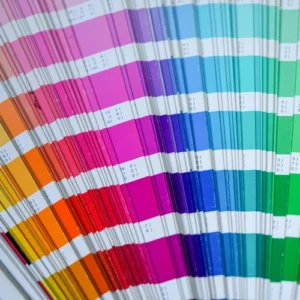
To obtain a color, in the laboratories of plastics processing companies, we usually start with the analysis of a starting sample or a color code to be followed. Then, a formula is developed that allows the nuance to be reproduced on a test sample and, upon approval, on an industrial scale. Subsequently, the quality department verifies that the final product is as faithful as possible to the original sample, making sure that the mix of pigments chosen reproduces exactly the desired shade and that there have been no unexpected alterations. However, it may happen that you compare two pieces, produced at different times, and notice significant differences in color, even though you have used the same raw materials. This problem, for no apparent reason, is common and can complicate color consistency in the different industrial productions of the same article.
Colour tolerance and colour control
The issue, known as chromatic drift, was explored in our previous article. The phenomenon consists of the gradual alteration of the color of a product, between the different productions of the same over time. But then, how to guarantee the inalterability of a mass-produced color in the plastics processing chain? The answer is not obvious and many paths open up here. In order not to find any nasty surprises, at Gaypa we use two main methods. The first is a tight color tolerance. This measure indicates how much a shade is allowed to vary from the original sample, in technical jargon how much the color can deviate. These are almost imperceptible differences to the naked eye, identifiable only through machines, called spectrophotometers (which have nothing to do with the Ghostbusters). Here, we have decided that our margin of error, called tolerance, must be narrow and very rigid. A bit like the tolerance that grandma has with you when she finds out that you have had a nose piercing. Very close to zero.
The trick of subdivision
The second method we have adopted is allotment, i.e. a chromatic control even between production batches of the same article and always with reference to the original sample. This highlights the alterations that occur from batch to batch, allowing them to be corrected before embarking on the path of no return, the chromatic drift. If the color comparison is only made with the previous production batch, you run the risk of losing the original reference point. This method requires choices on strong raw materials, to ensure high quality over time. It happens that colorist wannabes combine pigments in bulk. They don’t know, however, that each raw material is unique and, for example, even if you put together a new blue with an old yellow, it may not result in the same shade of green that you usually get. It depends on the chemistry. Only experienced masterbatch producers know which are the best ingredients to use to create perfect recipes that are consistent in “flavor”. The secret is precisely in the formula
How to calculate the difference between colors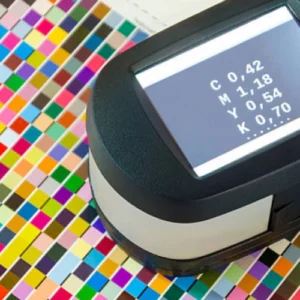
The difference between colors is often expressed in units called ΔE (Delta E), which quantify the perceived difference between two colors. A ΔE less than 1 is generally imperceptible to the human eye. Comparing the ΔE unit of a product to the original sample is a useful piece of data to identify color alterations and an alarm bell to listen to to prevent colors from drifting, from production to production. This is particularly relevant in the plastics processing industry, such as masterbatches, where even small variations can affect the final result. For greater control, spectrophotometers are used, which are essential tools for accurately measuring color. Spectrophotometers measure the full spectrum of reflected or transmitted light, providing a detailed reading of color characteristics.
Attention to detail for plastics processing
At Gaypa, thanks to these color control methods, we are committed to ensuring high quality products and color consistency. If you want to know more about who we are and what we do, come and read what we can do for you and contact us!